Journal · Research
The characters in the seal: reading the Shuowen
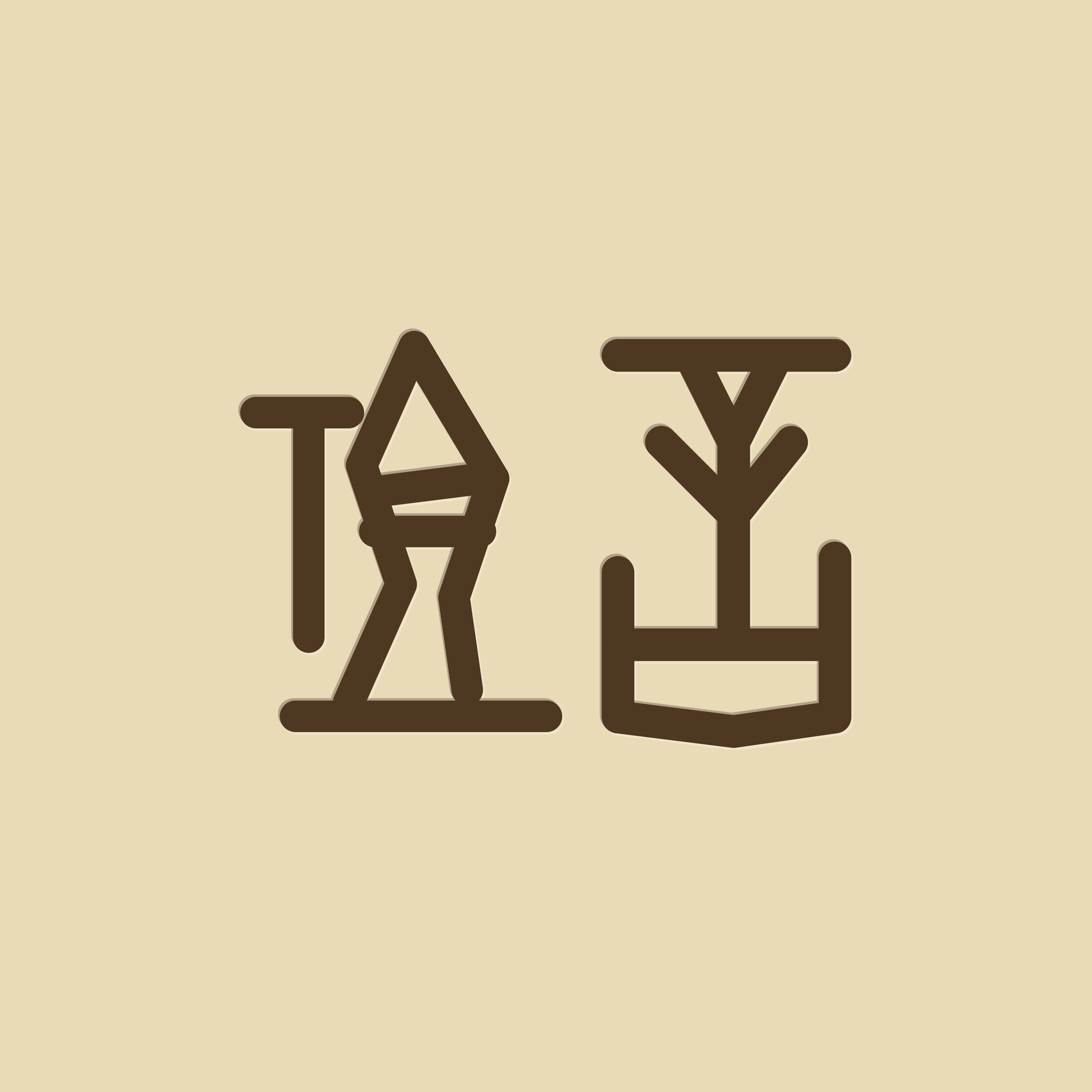
The house mark is a pair of characters in small-seal script, traced from the head forms in the Shuowen Jiezi, Xu Shen's dictionary completed in the second century AD. The Shuowen glosses the first character as the ancestral temple, built from the altar element and a phonetic; the second as discourse, built from the speech element and a phonetic. Both glosses can be read in the dictionary itself, in the sections where our pair still sits as head characters.
One fact disciplines every claim made about the mark: the second character has no oracle-bone form. Its earliest attestations are bronze, and they are late: a late Spring-and-Autumn bell, and the Zhongshan Wang ding of the late Warring States. Any book, font or logo that shows an oracle-bone form of this character is inventing it. The first character, by contrast, was written in the oracle bones with a single older graph, later given the altar element in bronze.
The book that files the genuine bronze forms is Rong Geng's Jinwen Bian (Zhonghua Shuju, definitive fourth edition 1985): 2,420 head characters and 19,357 variant forms drawn from 3,902 cited vessels, every glyph a tracing from a rubbing or photograph, and every form carrying its vessel source. That is where a scannable early form with provenance lives.
For the seal pair itself, the fitting source is the Shuowen in its standard modern facsimile: Zhonghua Shuju's photographic reprint of the 1873 Chen Changzhi carved edition. Of all the books on the research shelf, it is the one whose glyphs are true facsimile impressions of carved woodblock, rather than tracings. A facsimile press could hardly choose a more appropriate authority.
The research also priced the shelf: the Jinwen Bian in a used 1985 printing from about 5,500 yen, the Shuowen facsimile at about 8,600 yen, the oracle compendium Jiaguwen Bian from about 13,000 yen. Buying the shelf is a journal entry of its own, when it happens.